
The Pope may inspire, but bishops decide
The following article by for Eureka Street by John Warhurst was written in the weeks following the death of Pope Francis.
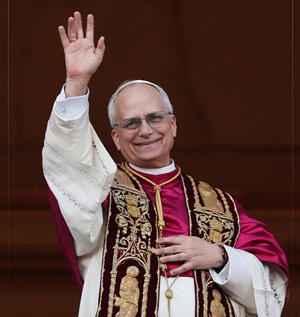 Now is the time to turn our attention from Rome back to Australia. Australian Catholics, and indeed Australians in general, have had their eyes firmly fixed on the Vatican since the death of Pope Francis on Easter Monday. Vatican events have followed one after the other. Pope Leo XIV has now been elected and said his first public Mass. Our Governor-General and our Prime Minister have been in attendance in Rome at different times, as have many Australian bishops, media, lay faithful and tourists.
Our fixation with the shock and sadness, excitement and awe, in the Vatican has both symbolic and practical elements. It is symbolic in that we are proud that ‘our’ Pope attracts such enormous worldwide attention. Many of my friends of other faiths and none want to reflect on Francis and to learn more about Leo. Even my secular U3A current affairs class in Canberra has sought out a speaker on the new pope. It is practical in that the tenor of our Catholic lives is shaped by the universal church and by the emphases of the Pope of the day. Thus, our fixation is quite rational.
We know, however, that what the Pope sets out to do is not always what the Australian church ends up doing. Our day-to-day lives as Catholics are determined more directly by our diocesan bishop. We should be just as interested in their traits, gifts and special interests as we are in those of the Pope. Their character makes a great difference to the life of the local church. We know that such bishops are independent, make their own governance arrangements, and have varying levels of enthusiasm about the directions marked out by the Pope. That was obvious in Australia under Pope Francis. It will be the same under Pope Leo.
Yet it is hard to maintain a local interest given how such appointments come about. There is a connection, of course. Diocesan bishops worldwide are appointed by the Pope and that process has already begun again under Pope Leo after a short hiatus upon the death of Pope Francis.
This is a process Leo has been intimately involved with since 2023 when he was put in charge, as prefect, of the dicastery for bishops in Rome. This role gave him extra insights into the global church and may have contributed to him becoming pope. He is now signing off on appointments which have been in train in the dicastery while he was in charge. That may apply to some Australian appointees.
The appointment of diocesan bishops is an opaque and often tortuous process, conducted out of sight of most Catholics. The same is true of the papacy too, of course, though in this case we do at least know when the process is underway shortly after a pope dies.
The broad outline of the episcopal appointment process is known. The local Nuncio prepares a list of three names (known as a terna) which is then sent to Rome for higher-level processing. During the preparation in the local church, some tightly controlled consultation is undertaken in the diocese and across the country. Unfortunately, most Catholics never even know about it.
There have been calls to make the process more open to wider consultation, including greater participation by lay Catholics (without making it democratic in any sense). The Australian Plenary Council and the international Synod of Bishops on Synodality have both made such calls recently.
So far suggested reforms have come to little as far as I know, though the current Nuncio, Archbishop Charles Balvo, is known to be approachable and open to such wider consultation. Australian Catholics are fortunate in that regard. Balvo has put out the welcome mat in Canberra to those wishing to share their thoughts about a particular appointment.
The local part of the appointment process begins when a diocesan bishop or archbishop reaches the age of 75 and submits their resignation to the Pope. After that it can take some years for a new appointment to be made.
There are currently several vacancies in Australian dioceses. Until this week, two of the country’s seven archdioceses, Brisbane and Hobart, were without a bishop, with Archbishops Mark Coleridge and Julian Porteous having reached the retirement age of 75 and submitting their resignations to the Pope. As of Wednesday, one of those vacancies has been filled: Bishop Shane Mackinlay, previously Bishop of Sandhurst, has been appointed the new Archbishop of Brisbane.
Australian Catholics, whatever their persuasion, should take an interest in these appointments, because to a greater or lesser degree they will make a difference to their church lives. Yet even in the archdioceses concerned, only a few Catholics take even a passing interest and many of those feel excluded. That is not surprising given the lack of transparency.
It is probably too late to be involved in these consultations if you haven’t yet been asked. But if we are serious about synodality and a greater voice for lay Catholics, we should recognise the significance of what is about to happen. Let us pray for now and watch out for the news when it comes. In the longer term, let’s do something positive about the process. ‘Whatever Pope Leo says or does, it will be these appointees and others who directly shape our Catholic lives in Australia.’
John Warhurst is an Emeritus Professor of Political Science at the Australian National University.


